

Barley Flakes Market Size to Worth USD 15.30 Billion by 2034 | Towards FnB
According to Towards FnB, the global barley flakes market size is evaluated at USD 10.39 billion in 2025 and is anticipated to hit USD 15.30 billion by 2034, reflecting at a CAGR of 4.4% from 2025 to 2034. This forecast signals steady market momentum driven by increased adoption of barley-based formulations in both mainstream and specialty food product categories.
Ottawa, Dec. 11, 2025 (GLOBE NEWSWIRE) -- The global barley flakes market size stood at USD 9.95 billion in 2024 and is predicted to grow from USD 10.39 billion in 2025 to reach around USD 15.30 billion by 2034, according to a report published by Towards FnB, a sister firm of Precedence Research. The jump expected from 2024 to 2025 highlights accelerating adoption of barley flakes in fortified cereals, clean-label bakery applications, and convenience-driven food products. This shift also reflects greater interest from food processors exploring versatile whole-grain ingredients to enhance texture, nutrition, and recipe stability.
Current market expansion is supported by a surge in consumers prioritizing nutritional density, transparency, and ingredient quality, alongside a strong preference for convenient, ready-to-use grain options. Barley flakes are gaining traction as they align with emerging dietary priorities, such as higher fiber intake, reduced reliance on refined carbohydrates, and increased interest in minimally processed foods. Additionally, brands are leveraging barley flakes to meet the rising demand for wholesome snacks and breakfast products that offer sustained energy and balanced nutrition.
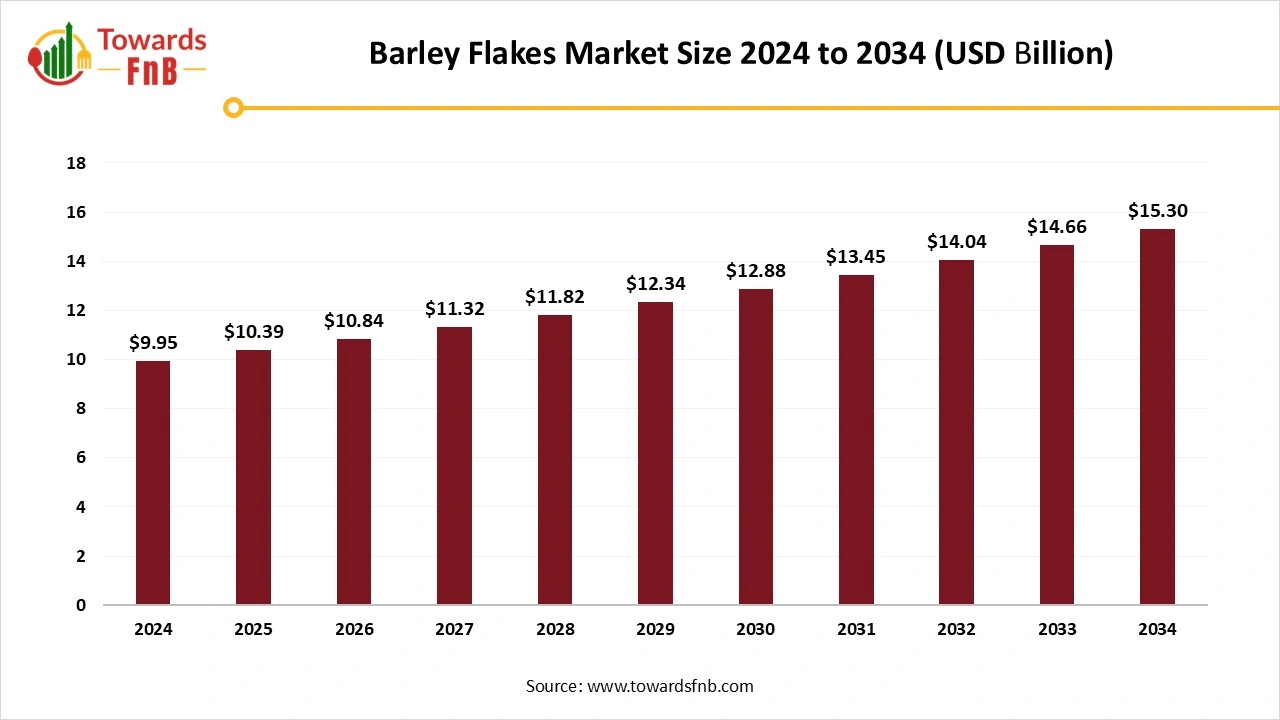
Note: This report is readily available for immediate delivery. We can review it with you in a meeting to ensure data reliability and quality for decision-making.
Access the Full Study Instantly | Download Sample Pages of the Report Now@ https://www.towardsfnb.com/download-sample/5942
Key Highlights of Barley Flakes Market
- By region, Europe led the barley flakes market in 2025, whereas the Asia Pacific is expected to grow in the foreseeable period.
- By product, the conventional segment dominated the barley flakes market in 2025, whereas the organic segment is expected to grow in the foreseeable period.
- By distribution channel, the supermarkets/hypermarkets segment led the barley flakes market in 2025, whereas the online retail segment is expected to grow in the expected timeframe.
Barley flakes are shifting from a traditional grain product to a strategic ingredient powering the next generation of functional foods,” said Vidyesh Swar, Principal Consultant at Towards FnB. “Manufacturers who invest early in high-fiber formulations, organic-certified barley, and convenience-ready breakfast categories will be best positioned to capture the strongest returns over the next decade.”
Higher Demand for Convenient and Nutritious Options is Fueling the Growth of the Barley Flakes Industry
The barley flakes market is expected to grow due to factors such as a growing population of health-conscious consumers, higher demand for convenient and nutritious breakfast options, and higher demand for plant-based options as well. Today, the growing prevalence of lifestyle-related health issues such as cholesterol, diabetes, and cardiovascular problems is impacting consumers on a huge scale. Hence, improved food habits are essential to stay at bay from such issues, further fueling the growth of the market.
Barley flakes are obtained from whole grain or pearled barley kernels. They are an ideal source of protein, vitamins, fiber, and various other essential nutrients. Hence, they are highly demanded by health-conscious consumers as a convenient breakfast option. They are also ideal for consumers with high cholesterol and diabetes to manage their health issues and follow a healthy lifestyle. They also help to keep one satiated for a longer time, helpful to avoid junk and fried foods, damaging the health charts.
- According to global dietary surveys, consumption of whole grains has risen by 18–24% in major markets since 2020. Additionally, over 40% of millennials report replacing refined cereal breakfasts with high-fiber alternatives, aligning with the rise of barley-based products.
Domains Helpful to Fuel the Growth of the Barley Flakes Market
- Food Industry- The growing food industry has made one of the major contributions to the growth of the market. Barley flakes are essential for making various food options, such as healthier breakfast options, healthy protein bars and powders, soups, and other functional food options.
- Beverage Industry- Higher demand for barley-based beverages is another major factor for the growth of the market. Barley-based beverages, such as malted beverages and various health drinks, also help to fuel the growth of the market. Innovations in such beverages to improve gut health are another major factor for the growth of the market.
-
Animal Feed- Another major industry demanding barley flakes involves the animal husbandry industry. They are mostly utilized for animal nutrition for high energy and easy digestion.
Impact of AI on the Barley Flakes Market
Artificial intelligence (AI) is influencing the barley flakes market by improving grain sourcing, strengthening quality control, and supporting more efficient processing. In agricultural planning, AI tools interpret soil data, rainfall patterns, and temperature records to help growers identify optimal planting and harvesting periods for malting barley and food-grade barley. These models also flag early stress indicators such as nutrient deficiencies or fungal risks, which helps secure more stable grain quality for flaking operations.
Once barley reaches processing facilities, AI-based cleaning and grading systems use computer vision to distinguish damaged kernels from sound kernels. These systems evaluate color, size, and surface irregularities with higher accuracy than manual inspection. This improves the uniformity of the raw material entering the steaming and rolling stages.
During flaking, AI-supported process control systems track moisture content, kernel pliability, and roller temperature. Machine learning models adjust steam exposure and roller pressure to maintain consistent flake thickness and prevent breakage. These adjustments are important for applications that require specific hydration behavior in bakery mixes, ready-to-eat cereals, or instant porridge products.
Quality assurance now relies on a combination of imaging tools and near-infrared analysis supported by AI. These tools measure starch damage, beta-glucan content, and moisture levels in real time. This helps processors meet the specifications required by manufacturers who use barley flakes for fiber enrichment or glycemic index reduction in finished foods.
View Full Market Intelligence@ https://www.towardsfnb.com/insights/barley-flakes-market
New Trends of Barley Flakes Market
- Higher demand for fiber-rich and whole-grain options to maintain heart health and manage diabetes is one of the major factors for the growth of the market.
- The growing population of vegans and vegetarians demanding plant-based and nutritional options is another major factor for the growth of the market.
- Higher usage in making breakfast options such as smoothies, granola, oatmeal, and porridge also helps to fuel the growth of the market.
- Higher usage in the bakery industry for the preparation of cakes, cookies, muffins, and breads also helps to propel the growth of the barley flakes market.
- Use of barley flakes for making traditional and gluten-free recipes also helps to enhance the market’s growth.
Recent Developments in the Barley Flakes Market
- In September 2025, Kellogg’s launched multigrain + corn flakes for India. The newly launched variant is packed with the power of 5 grains- ragi, wheat, barley, rice, and corn.
Top Products in the Barley Flakes Market
| Product Category | Description or Function | Common Forms or Variants | Key Applications or End Use Segments | Representative Producers or Brands |
| Regular Barley Flakes | Standard steamed and rolled barley grains are used for general food applications. | Whole barley flakes, medium rolled flakes | Breakfast cereals, porridge, bakery, instant mixes | Bob’s Red Mill, Arrowhead Mills |
| Quick Cooking Barley Flakes | Thin rolled barley flakes that cook faster due to reduced thickness. | Thin flakes, instant barley flakes | Instant porridge, ready-to-cook meals | Bob’s Red Mill Quick Barley, private label instant flakes |
| Organic Barley Flakes | Certified organic barley flakes for clean label and natural product categories. | Organic whole barley flakes, organic rolled flakes | Organic cereals, premium granola, and natural food retail | Nature’s Path, organic milling companies |
| Gluten Free Barley Flakes (Processed to Remove Gluten) | Specialty processed flakes are used in regions where barley gluten removal is permitted. | Gluten-reduced barley flakes | Specialty diets were allowed by local regulations | Limited regional producers supporting gluten-reduced options |
| Pearled Barley Flakes | Barley flakes are made from pearled barley, which has had the outer hull removed. | Pearled thin flakes, pearled medium flakes | Soups, ready meals, hot cereals | European barley millers, grain processors |
| Malted Barley Flakes | Lightly malted flakes offering sweetness and improved flavor. | Light malt flakes, dark malt flakes | Granola, baked goods, craft brewing adjuncts | Muntons, Briess Malt |
| Toasted Barley Flakes | Barley flakes are toasted to develop enhanced aroma and flavor. | Lightly toasted flakes, dark roasted flakes | Breakfast cereals, snack bars, granola | Specialty cereal brands, artisanal grain processors |
| Barley Flake Blends | Multi-grain mixes combine barley flakes with oats, rye, quinoa, or seeds. | 5 grain blends, barley oat blends | Muesli, granola, hearty cereal blends | Alpen, Quaker style private label blends |
| High Fiber Barley Flakes | Barley flakes selected for higher beta-glucan content to support cholesterol reduction. | High beta-glucan flakes | Functional foods, heart health products | Grain millers supplying functional barley |
| Sprouted Barley Flakes | Flakes produced from sprouted barley offer improved digestibility and nutrient availability. | Sprouted whole barley flakes | Health foods, clean label bakery | One Degree Organic Foods |
| Barley Flakes for Brewing | Flakes are used as adjuncts in brewing to improve mouthfeel and head retention. | Flaked barley, roasted flaked barley | Craft beer production | Briess Malt, Thomas Fawcett |
| Flavored Barley Flakes | Consumer-oriented flavored cereal flakes. | Honey barley flakes, chocolate barley flakes | Breakfast cereals, kids' food | Private label brands, specialty cereal makers |
| Barley Flakes for Extruded Snacks | Flakes are used as a base or inclusion in extruded snack products. | Fine granulated flakes, pregelatinized flakes | Snack pellets, extruded bars | Snack ingredient suppliers |
| Barley-Based Infant and Toddler Cereal Flakes | Gentle flakes are used in baby cereals for easy digestion. | Finely milled barley flakes | Infant cereals, toddler porridge | Baby food manufacturers sourcing barley ingredients |
For Detailed Pricing and Tailored Market Report Options, Click Here: https://www.towardsfnb.com/checkout/5942
Barley Flakes Market Dynamics
What Are the Growth Drivers of the Barley Flakes Market?
Higher demand for nutrient-dense options and a growing population of health-conscious consumers are two of the major factors for the growth of the market. Such consumers opt for options that are sustainable, healthier, and ideal for managing lifestyle-related health issues such as diabetes, cholesterol, and cardiovascular problems. Growing demand for convenient and healthier breakfast options is another major factor for the market’s growth. Such options are highly opted for by consumers with a busy lifestyle to maintain their nourishment cycle and also save time. Hence, such factors help to aid the growth of the market.
Challenge
Lower Awareness and Consumer Education Obstruct the Growth of the Market
Availability of different types of fancy grains in the market leads to the same perception about barley in the minds of many consumers. Hence, many consumers perceive it as a costlier ingredient, restraining the growth of the market. Many consumers are also unaware of the health benefits of barley, further restraining the growth of the market. Hence, such factors altogether may obstruct the growth of the market.
Opportunity
A Growing Population of Plant-Based Diet Followers is Helpful for the Market’s Growth
The growing population of vegans, vegetarians, and flexitarians is one of the major opportunities for the growth of the market. Hence, consumers following a plant-based diet are always in search of options that are plant-based, further fueling the growth of the market. Hence, product innovation, allowing the manufacturers to provide consumers with various innovative options that are plant-based and healthy, also helps to fuel the market’s growth in the foreseeable period.
Barley Flakes Market Regional Analysis
Europe dominated the barley flakes market in 2024 due to growing population of health-conscious consumers, higher demand for clean-label and organic options, and higher demand for healthier breakfast options in the region are some of the major factors for the growth of the market. The growing food and beverages industry, along with the growing agricultural industry, is one of the major factors for the growth of the market. The UK, France, and Germany have a major contribution to the growth of the market of the region due to high demand for whole grains, high-fiber options, and higher demand for organic options to balance the nutritional profile, further fueling the growth of the market.
Asia Pacific is observed to be the fastest-growing region in the foreseen period due to higher demand for organic and healthier options, along with higher demand for western cereal snack options that are convenient and healthier, making them ideal for breakfast. The region also observes growth due to the higher nutritional benefits of barley, making it perfect for making various functional food options such as breads, cookies, muffins, smoothies, and oatmeal.
Countries such as India, China, and Japan have made major contributions to the growth of the market due to higher demand for convenient and healthier breakfast options. Higher demand for gluten-free options in the region also propels the market’s growth.
North America is observed to have a notable growth in the foreseen period due to higher demand for gluten-free, organic, functional, and whole grain options, fueling the growth of the market. The market also observes growth due to the growing population of health-conscious consumers in the region. Higher demand for healthier, sustainable, and convenient breakfast cereals and other options also helps to fuel the market’s growth. The US has a major contribution to the growth of the market due to the higher demand for plant-based and healthier options.
Trade Analysis for the Barley Flakes Market
What Is Actually Traded (Product Forms)
- Bulk flaked or rolled barley intended for industrial bakery, snack, and ready-to-eat cereal manufacture, typically recorded under HS 1104.
- Retail-packaged barley flakes for household consumption, often declared under the same HS lines with additional trade-document metadata for consumer packs.
- Speciality pearled or debranned barley flakes for premium or ethnic food applications, sometimes captured under refined cereal product headings depending on the degree of processing.
Top Exporters (Supply Hubs)
- Australia: a leading barley exporter with large export volumes of both feed and processed cereal products. Australia’s export infrastructure supports shipments of worked grains and flaked products to Asia and the Middle East.
- France and Germany (EU exporters): significant suppliers of barley and processed cereal products to intra-EU and global markets, supported by milling and cereal-processing clusters.
- Russia and Canada: notable barley suppliers that also feed regional processing and flaking industries for both feed and food applications.
Top Importers (Demand Centres)
- China: a large importer of barley for feed and food processing, with import demand driven by livestock feed cycles and growing food-ingredient needs.
- Middle East and North Africa: importing both raw barley and worked cereal grains for bakery and cereal manufacture, where local production is limited.
- European consumer markets: import pockets for specialty barley flakes and premium food-grade barley where domestic supply does not meet specific debranned or pearled specifications.
Typical Trade Flows and Logistics Patterns
- Major movement: exporter grain ports in Australia and northern Europe → destination ports in East Asia, the Middle East, and North Africa. Flaked barley often ships in bulk bags or containers, with industrial users receiving palletised sacks.
- Processing and value-add routing: Raw barley is sometimes shipped to regional mills for conditioning and flaking close to large food manufacturing clusters to reduce freight on air and moisture risks.
- Packaging regimes: industrial flake shipments favour moisture-barrier bulk bags; retail flakes require tamper-evident consumer packs and stable palletised distribution for supermarket supply chains.
Trade Drivers and Structural Factors
- Feed versus food allocation: shifts in demand for feed barley or malting barley alter the volumes available for food-grade flaking.
- Milling and flaking capacity placement: Investment in regional cereal-processing plants reduces the need for long-distance shipment of heavier finished products and can redirect trade toward bulk raw barley.
- Consumer health trends: rising demand for whole-grain and high-fiber breakfast products supports growth in retail barley flakes in selected markets.
- Trade policy and market access: tariffs, sanitary checks, and politically driven trade measures can rapidly re-route traditional flows, as seen in recent years for several grain markets.
Regulatory, Quality and Market-Access Considerations
- Commodity classification must be precise: unworked barley uses HS 1003 while rolled or flaked products fall under HS 1104; correct classification speeds clearance.
- Food-safety testing: residues, mycotoxins, and foreign-matter limits are enforced by major importers. Buyers require certificates of analysis and traceability documents.
- Labelling and standards: retail flakes must meet country-specific labelling rules for nutrition claims, origin statements, and allergen information.
Government Initiatives and Public-Policy Influences
- Export policy shifts in major suppliers, including export taxes or quota changes, materially affect delivered costs and available volumes.
- Agricultural support programs for barley and cereals influence planting decisions that determine medium-term supply for flake processors.
Barley Flakes Market Report Scope
| Report Attribute | Key Statistics |
| Base Year | 2024 |
| Forecast Period | 2025 to 2034 |
| Growth Rate from 2025 to 2034 | CAGR of 4.4% |
| Market Size in 2025 | USD 10.39 Billion |
| Market Size in 2026 | USD 10.84 Billion |
| Market Size by 2034 | USD 15.30 Billion |
| Dominated Region | Europe |
| Fastest Growing Region | Asia Pacific |
| Regions Covered | North America, Europe, Asia-Pacific, Latin America and Middle East & Africa |
Have Questions? Let’s Talk—Schedule a Meeting with Our Insights Team: https://www.towardsfnb.com/schedule-meeting
Barley Flakes Market Segmental Analysis
Product Analysis
The conventional segment led the barley flakes market in 2024 due to its popularity for reasons such as low production costs, low input costs for manufacturing, and easy availability of the product on various platforms. Such whole grains are healthy, nutritious, have multiple applications, and are used by a wide range of consumers, fueling the growth of the market. The market also observes growth due to higher demand for convenient and nutrient-dense breakfast options by consumers with a hectic lifestyle. Such options are cost-effective, which further fuels the growth of the market.
The organic segment is expected to grow in the foreseeable period due to higher demand for functional and clean-label options, further fueling the growth of the market. The market focuses on options that are developed without the use of any chemical fertilizers or pesticides; hence, such options are highly demanded by health-conscious consumers and consumers who can spend easily on healthier options. Hence, such factors altogether fuel the growth of the market in the foreseen period.
Distribution Channel Analysis
The supermarkets or hypermarkets segment dominated the barley flakes market in 2024 due to the easy availability of such stores at maximum locations, allowing consumers to shop for their desired products with ease. Such stores have dedicated sections for different types of products, further fueling the growth of the market. Hence, it becomes easy for consumers to shop for their needs while scanning the new products. Such stores also provide discounts to their loyal consumers, making it an economical experience for them. Hence, such factors help to fuel the growth of the market.
The online segment is expected to grow in the foreseeable period due to the convenience provided by such stores, allowing consumers to shop for their desired products with ease. The segment also observes growth due to the easy availability of newly launched and different types of products, allowing consumers to shop for them with ease. Such platforms also provide consumers with heavy discounts, further fueling the growth of the market. Hence, the segment has a major contribution to the growth of the market of the region in the foreseeable period.
Feel Free to Get in Touch with Us for Orders or Any Questions at: sales@towardsfnb.com
Additional Topics Worth Exploring:
- Dietary Supplements Market: The dietary supplements market size is projected to reach USD 464.58 billion by 2034, growing from USD 192.68 billion in 2025, at a CAGR of 9.2% from 2025 to 2034.
- Frozen Food Market: The global frozen food market size is expected to grow from USD 214.32 billion in 2025 to reach around USD 347.01 billion by 2034, at a CAGR of 5.5% over the forecast period from 2025 to 2034.
- Vegan Food Market: The global vegan food market size is evaluated at USD 22.38 billion in 2025 and is expected to reach USD 55.88 billion by 2034, with a CAGR of 10.7% during the forecast period from 2025 to 2034.
- Sugar-Free Food Market: The global sugar-free food market size is expected to grow from USD 48.14 billion in 2025 to USD 83.2 billion by 2034, growing at a CAGR of 6.27% during the forecast period from 2025 to 2034.
- Food Additives Market: The global food additives market size is rising from USD 128.14 billion in 2025 to USD 214.66 billion by 2034. This projected expansion reflects a CAGR of 5.9% throughout the forecast period from 2025 to 2034.
- Ethnic Food Market: The global ethnic food market size is forecasted to expand from USD 93.47 billion in 2025 to reach around USD 179.21 billion by 2034, growing at a CAGR of 7.5% during the forecast period from 2025 to 2034.
- Meal Kits Market: The global meal kits market size is projected to rise from USD 17.11 billion in 2025 to approximately USD 58.8 billion by 2034, registering a CAGR of 14.7% during the forecast period from 2025 to 2034.
- Baking Ingredients Market: The global baking ingredients market size is projected to grow from USD 18 billion in 2025 to around USD 31.72 billion by 2034, at a CAGR of 6.5% during the forecast period from 2025 to 2034.
- Fresh Produce Market: The global fresh produce market size is projected to grow from USD 3,707 billion in 2025 to approximately USD 5,653 billion by 2034. This anticipated growth represents a CAGR of 4.80% during the forecast period from 2025 to 2034.
- Beverage Packaging Market: The global beverage packaging market size is projected to reach USD 271.80 billion by 2034, growing from USD 173.71 billion in 2025, at a CAGR of 5.1% during the forecast period from 2025 to 2034.
- Coconut Products Market: The global coconut products market size is expected to climb from USD 14.18 billion in 2025 to approximately USD 33.71 billion by 2034, growing at a CAGR of 10.1% during the forecast from 2025 to 2034.
- Pet Food Market: The global pet food market size is expected to increase from USD 113.02 billion in 2025 to USD 167.97 billion by 2034, growing at a CAGR of 4.5% throughout the estimated timeframe from 2025 to 2034.
-
Organic Food Market: The global organic food market size is expected to grow from USD 253.96 billion in 2025 to USD 660.25 billion by 2034, with a compound annual growth rate (CAGR) of 11.20% during the forecast period from 2025 to 2034.
Top Companies in the Barley Flakes Market
- King Arthur Baking Company, Inc.: King Arthur Baking Company is a respected American brand known for its premium baking flours, grains, and mixes. The company offers high-quality whole-grain ingredients, including barley-based products, catering to home bakers and professionals seeking consistent, clean-label grain options.
- Honeyville, Inc.: Honeyville is a leading U.S. food processor specializing in grains, flours, and custom-blended ingredients. The company supplies barley flakes and other cereal products to commercial bakeries, food manufacturers, and retail consumers through its extensive bulk and packaged offerings.
- Dun & Bradstreet, Inc.: Dun & Bradstreet is a global provider of business intelligence, analytics, and data solutions. While not a barley flakes manufacturer, its industry data and market insights support grain processors, ingredient suppliers, and food companies in evaluating supply chain, financial, and operational risks.
- CEREAL FOOD MANUFACTURING CO: Cereal Food Manufacturing Co focuses on producing cereal ingredients, including rolled and flaked grains used in breakfast cereals, baked goods, and health-focused food applications. The company supports large-scale food processors with consistent quality, bulk supply, and customizable grain formulations.
- Briess Malt & Ingredients: Briess Malt & Ingredients is a well-established U.S. producer of malted grains, including malted barley flakes widely used in brewing, baking, and natural food markets. The company is known for its craft-focused innovation and specialty grain ingredients with enhanced flavor profiles.
- Vitasana Foods Pvt Ltd: Vitasana Foods, based in India, manufactures whole grains, cereal flakes, and natural food ingredients for domestic and international markets. Its barley flakes portfolio serves health-food brands, exporters, and private-label clients seeking reliable, nutrient-rich grain components.
- Shiloh Farms: Shiloh Farms is a natural and organic foods brand offering whole grains, cereals, and plant-based pantry staples. The company provides organic barley flakes and related products, appealing to consumers seeking minimally processed, clean-label, and nutrient-dense ingredients.
- Bob’s Red Mill Natural Foods: Bob’s Red Mill is a globally recognized brand specializing in stone-ground whole grains, cereals, and baking ingredients. Its barley flakes and multigrain blends are popular among health-conscious consumers due to their high quality, transparent sourcing, and commitment to whole-grain nutrition.
Segments Covered in the Report
By Product
- Conventional
- Organic
By Distribution Channel
- Convenience Stores
- Supermarket/Hypermarket
- Online
By Region
North America
- U.S.
- Canada
Asia Pacific
- China
- Japan
- India
- South Korea
- Thailand
Europe
- Germany
- UK
- France
- Italy
- Spain
- Sweden
- Denmark
- Norway
Latin America
- Brazil
- Mexico
- Argentina
Middle East and Africa (MEA)
- South Africa
- UAE
- Saudi Arabia
- Kuwait
Thank you for exploring our insights. For more targeted information, customized chapter-wise sections and region-specific editions such as North America, Europe, or Asia Pacific—are also available upon request.
For Detailed Pricing and Tailored Market Report Options, Click Here: https://www.towardsfnb.com/checkout/5942
Feel Free to Get in Touch with Us for Orders or Any Questions at: sales@towardsfnb.com
Unlock expert insights, custom research, and premium support with the Towards FnB Annual Membership. For USD 495/month (billed annually), get full access to exclusive F&B market data and personalized guidance. It’s your strategic edge in the food and beverage industry: https://www.towardsfnb.com/get-an-annual-membership
About Us
Towards FnB is a global consulting firm specializing in the food and beverage industry, providing innovative solutions and expert guidance to elevate businesses. With an in-depth understanding of the dynamic F&B sector, we deliver customized market analysis and strategic insights. Our team of seasoned professionals is committed to empowering clients with the knowledge needed to make informed decisions, ensuring they stay ahead of market trends. Partner with us as we redefine success in the rapidly evolving food and beverage landscape, and together, we’ll navigate this transformative journey.
Web: https://www.towardsfnb.com/
Our Trusted Data Partners
Precedence Research | Statifacts | Towards Packaging | Towards Chemical and Materials| Nova One Advisor | Food Beverage Strategies | FnB Market Pulse | Nutraceuticals Func Foods | Onco Quant | Sustainability Quant | Specialty Chemicals Analytics
For Latest Update Follow Us:
Discover More Market Trends and Insights from Towards FnB:
➡️Salt Market: https://www.towardsfnb.com/insights/salt-market
➡️Protein Bar Market: https://www.towardsfnb.com/insights/protein-bar-market
➡️Gluten-Free Bakery Market: https://www.towardsfnb.com/insights/gluten-free-bakery-market
➡️Canned Food Market: https://www.towardsfnb.com/insights/canned-food-market
➡️Dry Fruit Market: https://www.towardsfnb.com/insights/dry-fruit-market
➡️Frozen Meat Market: https://www.towardsfnb.com/insights/frozen-meat-market
➡️Fish Oil Market: https://www.towardsfnb.com/insights/fish-oil-market
➡️Soft Drink Concentrates Market: https://www.towardsfnb.com/insights/soft-drink-concentrates-market
➡️Coffee Beans Market: https://www.towardsfnb.com/insights/coffee-beans-market
➡️Soybean Market: https://www.towardsfnb.com/insights/soybean-market
➡️Beef Market: https://www.towardsfnb.com/insights/beef-market
➡️Cheese Market: https://www.towardsfnb.com/insights/cheese-market
➡️Food Packaging Market: https://www.towardsfnb.com/insights/food-packaging-market


Legal Disclaimer:
EIN Presswire provides this news content "as is" without warranty of any kind. We do not accept any responsibility or liability for the accuracy, content, images, videos, licenses, completeness, legality, or reliability of the information contained in this article. If you have any complaints or copyright issues related to this article, kindly contact the author above.
